
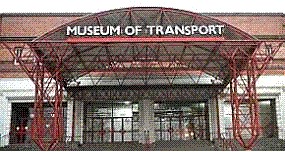
The Museum of British Transport, in the heart of Covent Garden, in south London, tells the story of public
transport in Britain.
In 1829, an Irishman called Shillibeer started the first bus-service, in London. His bus was very different to
the buses you can see in London today! It was drawn by three horses and looked very much like a large
carriage. This is now the famous London double-decker buses began. The first double-decker bus was built in
1851, but the upper deck did not have a roof until about 1930. The passengers were given raincoats to put on if
it started to rain!
The first trains, like the first buses, were drawn by horses, but they were not passenger-trains! They were used
in mines and factories to carry materials from one place to another.
Lots of people were afraid of the railways when they first began, and tried to stop them being built. People
were afraid of accidents; farmers would not let the rails be laid on their land because they said that the trains
would make their animals ill. But the rails were laid and, in 1842, people had to accept them. Why? Because
Queen Victoria, herself, traveled in a train from Slough to Paddington! A special railway carriage was built for
Queen Victoria in 1869.
The first passenger railway in England-and in the world-was the Liverpool and Manchester railway. In 1829,
this company offered a prize of 500 pounds for the best steam train. The prize was won by George Stephenson,
with his famous train, the "Rocket". It could travel at 29 miles per hour, which was very fast at that time. Do you
know the world record speed for a steam train? The record-breaking trail, "Mallard", which is now in this museum,
was built in 1938, it traveled at 126 miles per hour!
I. Learn the new words.
|
•to draw-drew-drawn •a carriage •a petrol-engine •a mine •a steam-train •to offer a prize •to accept •to lay-laid-laid •per hour |
•тягти •візок; вагон •бензиновий двигун •рудник, шахта •паровий поїзд •отримувати премію •визнавати •класти •на годину |
II. Put the missing letters.
he___rt p__blic tr__nsp__rt dra__n di__fer_nt fa_tor__ ma__eria__s
ca__ria___e rai__ wa__s pa_sen__er fa__m__r tr__in co__pan__ f__mo__s pri__e
st__am r__co___d sp__ed a__ce__t e__gi__e p__tr__l d__ubl__
III. Answer the questions.
1. Where is the Museum of British Transport situated? _______________________________________________
2. Who began the first bus-service?_______________________________________________________________
3. How did the first buses look like? ______________________________________________________________
4. Why were people afraid of the railways?_________________________________________________________
5. What were the first buses and trains used for? ____________________________________________________
6. Where was the first passenger railway?__________________________________________________________
7. Whom was a special railway carriage built for? ___________________________________________________